
Following from the golden years of Artificial Intelligence in the 1950’s, the boom hit in the 1980’s – unsurprisingly. The rise of expert systems, A.I. software, hardware, systems such as XCON and Intellect or languages such as OPS5 were all linked to specialised companies like Symbolics and IntelliCorp. But eventually, Artificial Intelligence itself was considered a huge failure, if you can believe it.
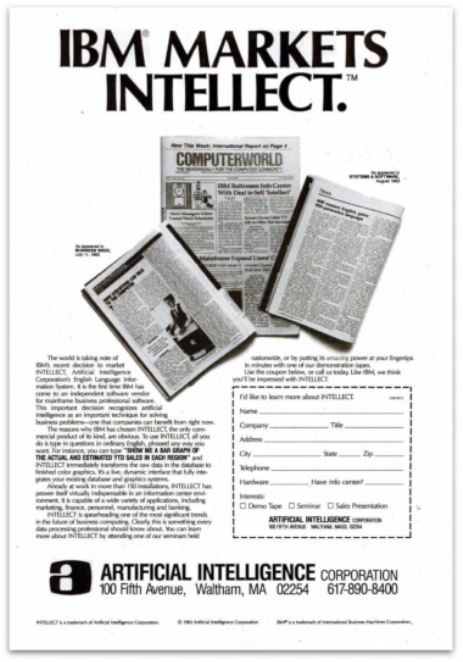
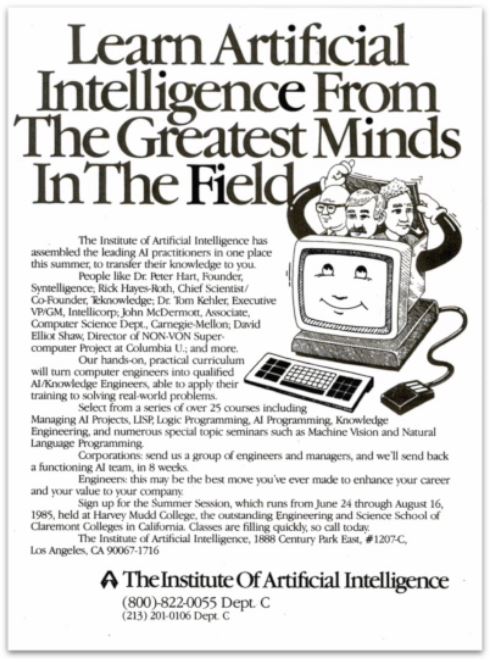
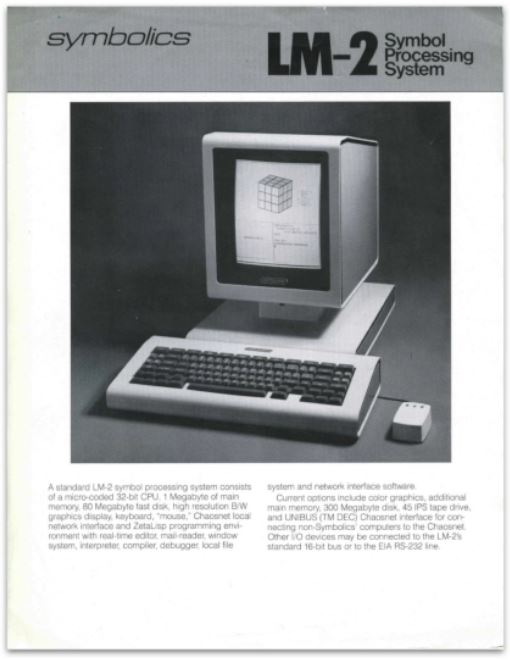
Computer industries at the time went from strength to strength but the Artificial Intelligence segment of Technology at the time simply crashed and burned. In the business world, Artificial Intelligence cost a ton of money and didn’t deliver so companies either went bust or pivoted away from it altogether. This A.I. Winter was when there were no investments or interest towards AI as the stigma for the sector meant even the term Artificial Intelligence carried a lot of baggage – even today there’s a trace of it as many professionals shy away from using the term so freely.
Machine Learning and Models

Why is this section in this article? Why is Machine Learning nearly always partnered up with Artificial Intelligence?
By now, you should have identified Artificial Intelligence as a vague term that we use, loosely describing how a computer might do something smart. Machine Learning comes under that umbrella term as a successful subset of AI but uses data – not explicit programming rules. Machine learning (ML) is effective but is not the only way to achieve Artificial Intelligence.
Conventional rule-based programming is fantastic, but ML uses examples to learn from and recognises patterns without the hard, tedious work. Data is fed into a learner (Machine Learning Algorithm) in a process called training a model – not quite Gigi on the runway.

After the model has been trained, the computer should be able to take in new data and identify similarities without understanding that information, it simply recognises characteristics. This is called classification, it determines whether an email is spam or not spam, whether someone is a high vs low value customer.
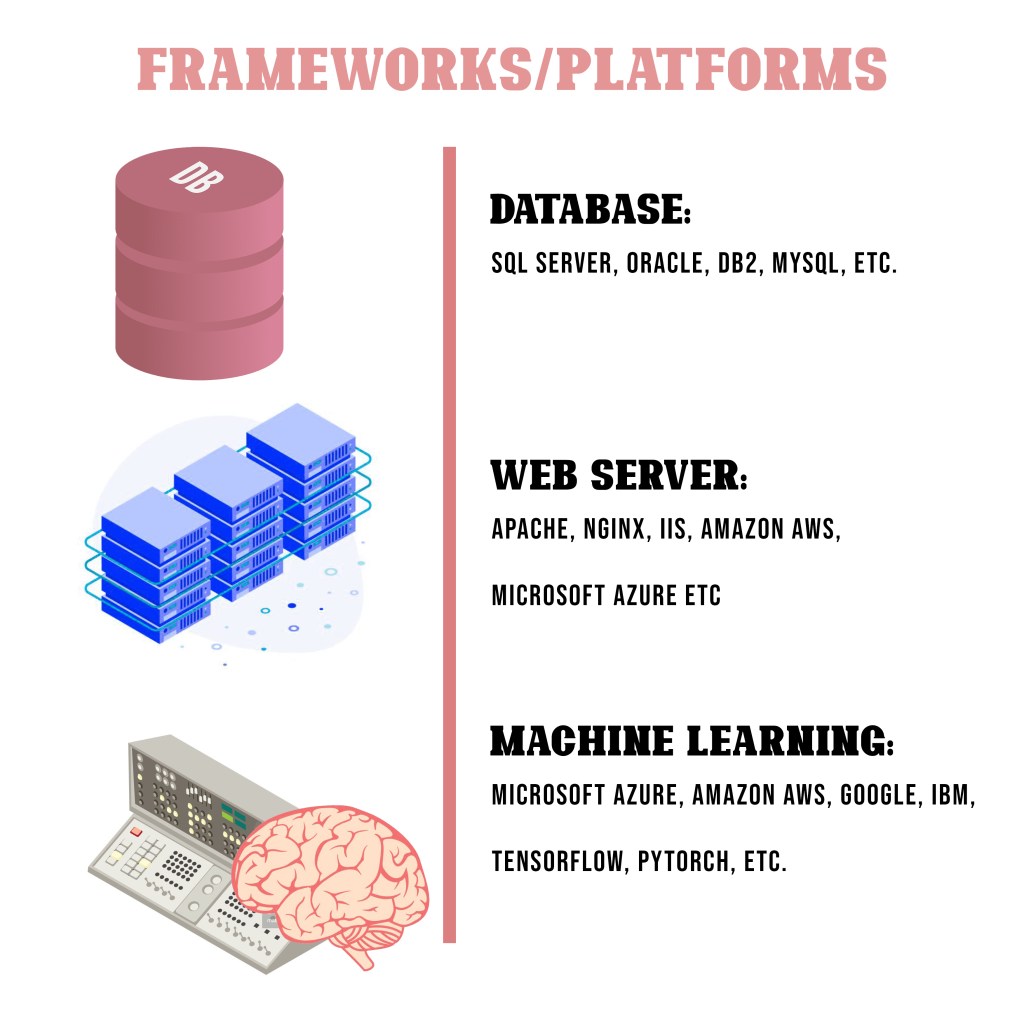
It’s extremely common to use a cloud-based ML platform. From commercial to open-source, they each have multiple tools and algorithms to choose from to apply to your data – depending on what you’re trying to do! The most important part of the process is understanding, preparing and filtering the data before it’s put into the algorithm. If you put garbage in, you can have a good guess what you’ll get out. This is where a data scientist comes in.
Back To The A.I. Market
The extremely volatile industry is over-flowing with acquisitions, start-ups, products, name changing and solutions. A simplified and general overview is the new broken barrier of cloud, which spares the need to build your own or pay the full for storage – you only pay for what you use. Algorithmic bias is one of the massive concerns within Artificial Intelligence. The model not only reflects but reinforces prejudice and when Machine Learning provides results or answers and predictions, it isn’t accompanied with an explanation. This is called the “Black Box” of A.I.
Deepfakes
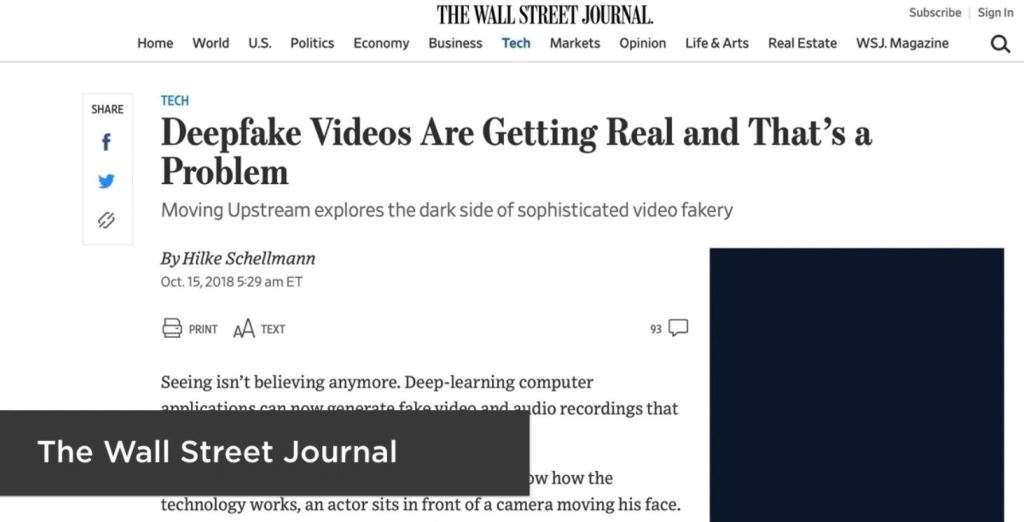
Intentional deception and manipulation using A.I. are getting more realistic every-time. Standards organisations like the IEEE have a global initiative on the ethics of autonomous and intelligent systems. Partnerships on AI has over 100 member organisations, including Apple, Amazon, Google & Accenture – trying to develop and establish guidelines and transparency about safety within Artificial Intelligence.


Neural Networks on the DL
With any popular frameworks for Machine Learning, there are a lot of pre-written algorithms to choose from. With names like ‘Multiclass Decision Jungle’, ‘Support Vector Machines’, ‘Logistic Regression’ or ‘Decision Trees‘. Many of the choices are based on statistics or probability but have nothing to do with the brain. However, Deep Learning (DL) is inspired by a part of the brain’s connections to other neurons.
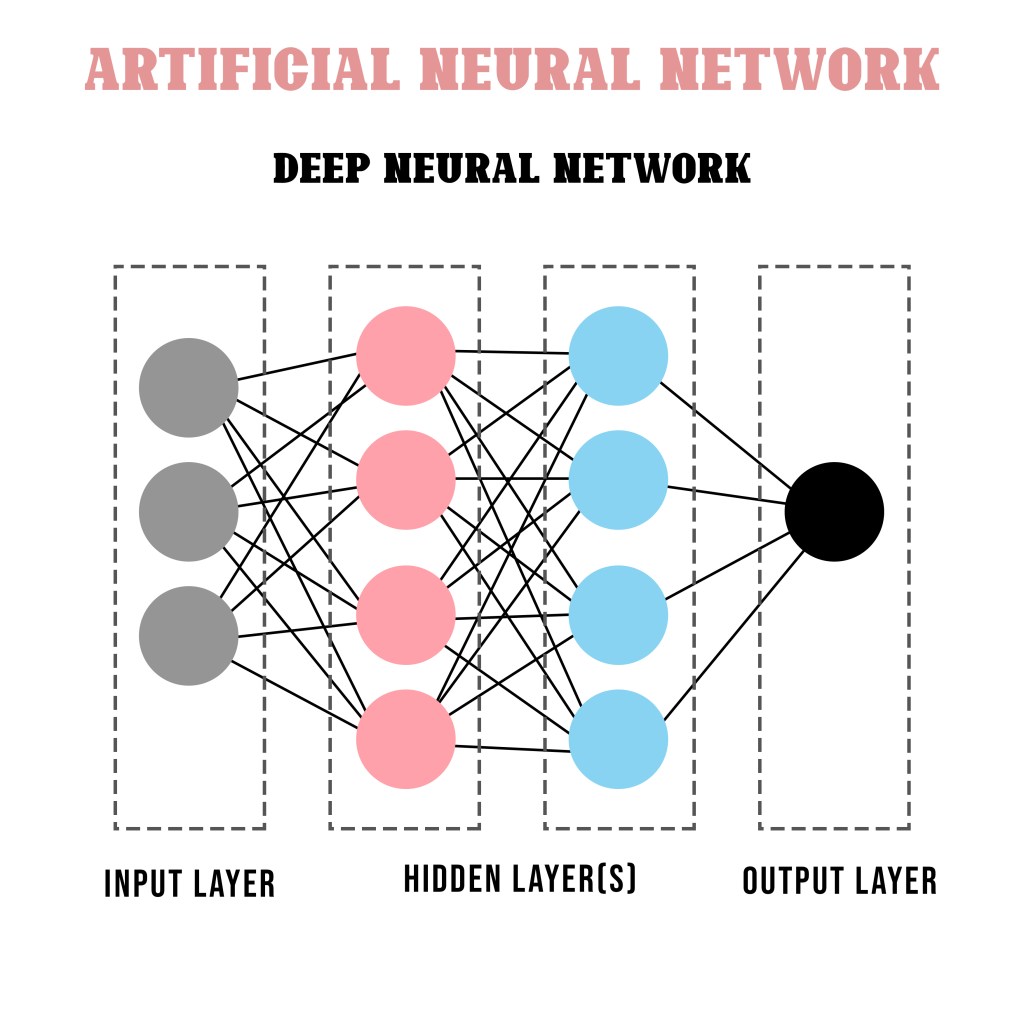
Artificial Neural Network uses simulated neurons; individual nodes that can be connected to and send messages to others. There’s always an input and output layer and typically always at least one hidden layer between them. When there’s more than one hidden layer it’s called a Deep Neural Network – this is where the deep in Deep Learning comes from.
Each neuron is capable of performing some small computation as data flows through it. This is still Machine Learning! Depending on what goes in to the input layer, the connections to the output layer are either strengthened or minimised.
Deep Learning has given us cases of:
- Image or video processing
- Facial recognition/speech recognition
- Complex Non-Linear Games
- Health Diagnoses
But these impressive and profound results from Deep Learning is computationally intensive, time crunching and requires a lot more data to be trained properly. Sometimes tens of thousands or hundreds of thousands of examples are required to train a Deep Learning model properly.
NGL NLP is TMI
Natural Language Processing (NLP) is basically the computer understanding from speech or text how humans communicate.
NLU is also commonly used, meaning Natural Language Understanding and NLG is Natural Language Generation – these are refinements of NLP.
Alexa, Siri, OK Google, Cortana, Vector etc. are more than just ‘speech to text’ systems as the computer needs to understand the variety of ways in which something could be said. NLU picks up the subject, concept, keywords, emotion and sentiment and is used in basic customer support, marketing and social media management.
One example of NLU is in automated sentiment – Sentiment Analysis is determining affective state of comments, reviews, survey responses, tweets, etc. Conversational User Interfaces may be text or voice-based, including chatbots and integrating with existing voice assistants which could be embedded on a website or social site. These functions over the last ten years have changed our expectations of conversational interfaces. Lex, Polly, SiriKit, Watson and others offer the ability to integrate your own Conversational User Interface and voice assistant. So it’s easier than ever to consider integrating Artificial Intelligence, in one form or another, with your own work or business.
Discover more from Posie Lombardi Rodriguez
Subscribe to get the latest posts sent to your email.
